 Skip to content


The Detail Guys MD · Maryland homeowner guide
Front yard landscaping ideas
A practical guide to entry paths and planting beds.
Quick answer
Start with front yard landscaping ideas that improve how you reach and use the entry. Mark the route visitors take, identify where rain crosses it, then lay out beds around that route. Once the walkway and drainage make sense, choose plants and finishes that work with the house and the light.
Before and after the front walkway

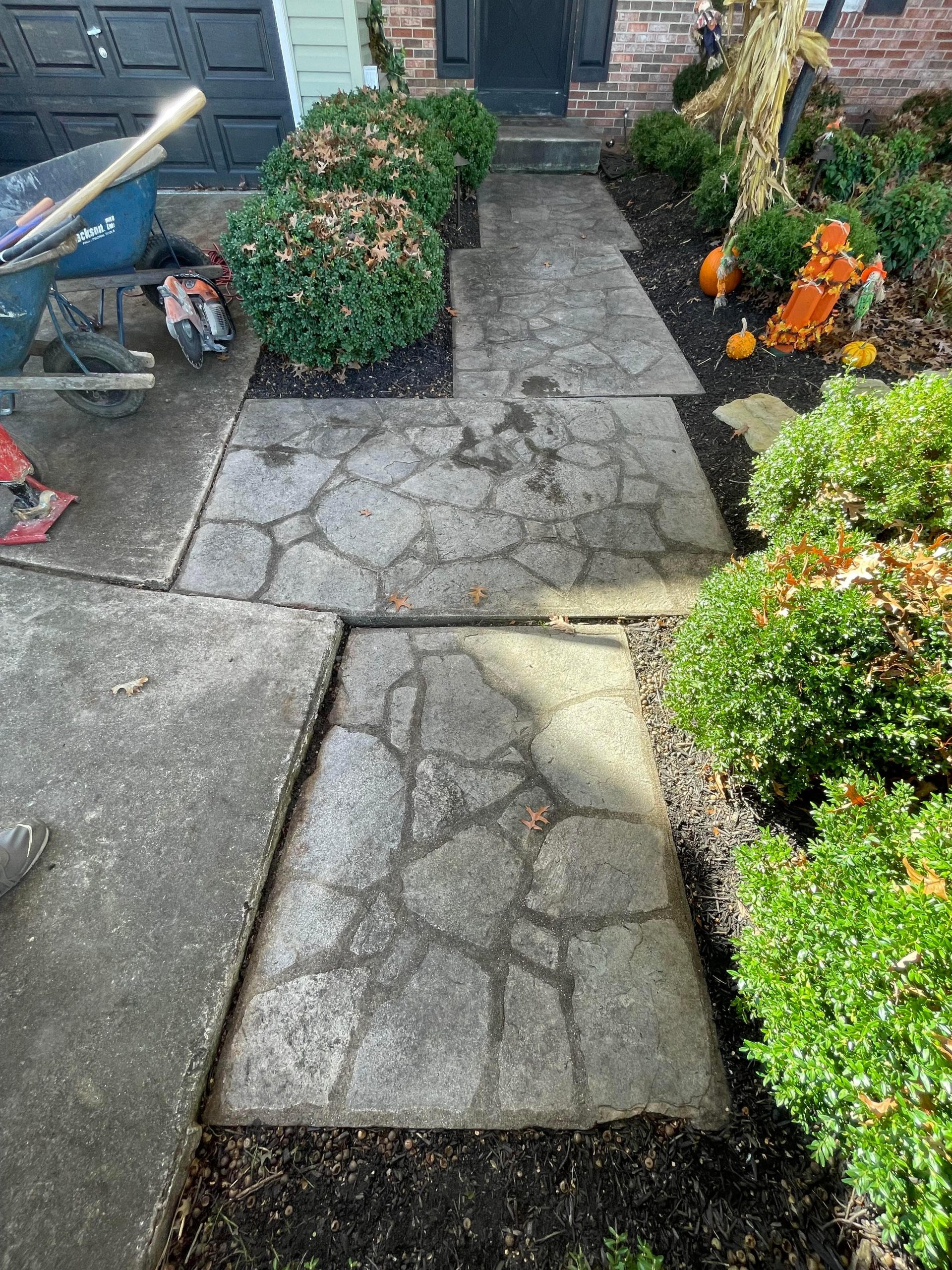
Sketch three workable front-yard layouts
For a straight approach, line up a clear walk with the door and keep planting below the sightline you need from the driveway. For a side approach, put the emphasis on the turn where visitors first see the entrance. A wider bed can mark that turn if it does not crowd the walk. For an entry on a slope, start by finding where the grade changes and where water runs. Mark those points before choosing the look of steps, paving, or a retaining edge.
Draw each option on a copy of the same site sketch. Add the likely width of mature shrubs, the route to a hose or utility, and room to clear leaves or snow. Then walk the best layout in both directions. A plan that looks inviting from the curb can still pinch the path near the door. Work through that conflict on the ground with a hose or flags before asking for an estimate.
Once the route is clear, compare the path surface and the way its edge meets the beds. Paver walkway options.
EPA explains how a planted depression can collect runoff from hard surfaces.
See how the walk and beds fit together
Plan the route to the door
Walk from the street and driveway toward the entrance. Note where people cut across the lawn, where a door swings, and where steps need a landing. Mark the route with a hose or chalk and test it before changing the beds.
Walk the routes people already use
Start at the curb, driveway, and sidewalk. Notice whether visitors can see the door and whether they tend to cut across grass. A clear path often does more for the front yard than adding a new bed. Stand where someone parks and check the transition to the path. Use a garden hose to test a route and walk it with anything you regularly carry, such as groceries or a bin.
Use rain to test the plan
Walk the yard during or just after rain and mark where runoff crosses the approach. Take photos of the lowest spots, where roof water exits, and any soil that washes across paving. Keep this map beside the layout. A new bed edge can block a path that water already uses. If water keeps reaching steps or the foundation, address that before choosing plants or finishes.
| Layout | Useful when | Test first |
|---|---|---|
| Straight approach | Door is visible from the curb | Walk from driveway and street |
| Side entry | The approach turns near the house | Check where the door comes into view |
| Sloped entry | Grade changes across the route | Trace runoff before selecting paving |

Lay out beds around the route
Map sun and shade and check where downspouts discharge. Use the size plants will reach when mature to decide how far a bed should extend. Leave room to reach utilities and keep views clear at the driveway. The City of Rockville explains how to choose plants that slow runoff and stabilize slopes.
Build the planting around how you maintain it
Mark the mature width of the plants you are considering on the ground with flags. Leave room to open doors, see the address, reach a hose bib, and work along the front of the house. Think about how a mower or trimmer will follow the bed edge. If the line is hard to follow with a hose now, simplify it before digging.
What to bring to a front yard design discussion
- Take photos from the street and the driveway so the designer can see where visitors start their walk.
- Draw the existing route, door swing, downspout outlets, and places where you need access to utilities or garden hoses.
- Mark which changes you want in the first phase and which parts of the yard must stay usable while the work is underway.
Phase the job in a useful order
Settle drainage and the path first, then define bed edges and planting. Take one photo from the curb and one from the door before starting. Use the same views as you plan the next phase.
Plan a first phase that looks finished
One workable first phase is a direct walk and a complete bed along one side. Finish the edge and leave a clear point where the next phase can meet it. Use the before-and-after walkway photos to see how an improvement can make the route clearer without changing the whole yard. If you need time to decide what to plant elsewhere, keep that part accessible and use the first phase to see how the yard behaves through rain and regular use.
Find your next step
Choose the condition closest to what you see.
Keep planning
Common questions
What should I photograph before starting?
Take a view from the curb, the main approach, and the door. Use those views to check how easily a visitor can spot the entry. One workable first phase is a direct walk and a complete bed along one side.
What can make my front door easier to find?
Mark a direct route and try it from the driveway and street. Walk from the street and driveway toward the entrance. Note where people cut across the lawn, where a door swings, and where steps need a landing. Mark the route with a hose or chalk and test it before changing the beds.
What if runoff crosses the front walk?
Trace runoff before selecting paving or plants. Map sun and shade and check where downspouts discharge. Use the size plants will reach when mature to decide how far a bed should extend. Leave room to reach utilities and keep views clear at the driveway.
How can I fill a bare-looking bed?
Outline the beds and check plant sizes against the available space. Settle drainage and the path first, then define bed edges and planting. Take one photo from the curb and one from the door before starting. Use the same views as you plan the next phase.
Talk through your project
Tell The Detail Guys what you are working on and what you have found so far.