 Skip to content


Landscaping With Rock Instead of Mulch
Stone stays in the bed. Organic mulch breaks down. The better choice depends on what grows there, what falls into it, and how you want to maintain it.

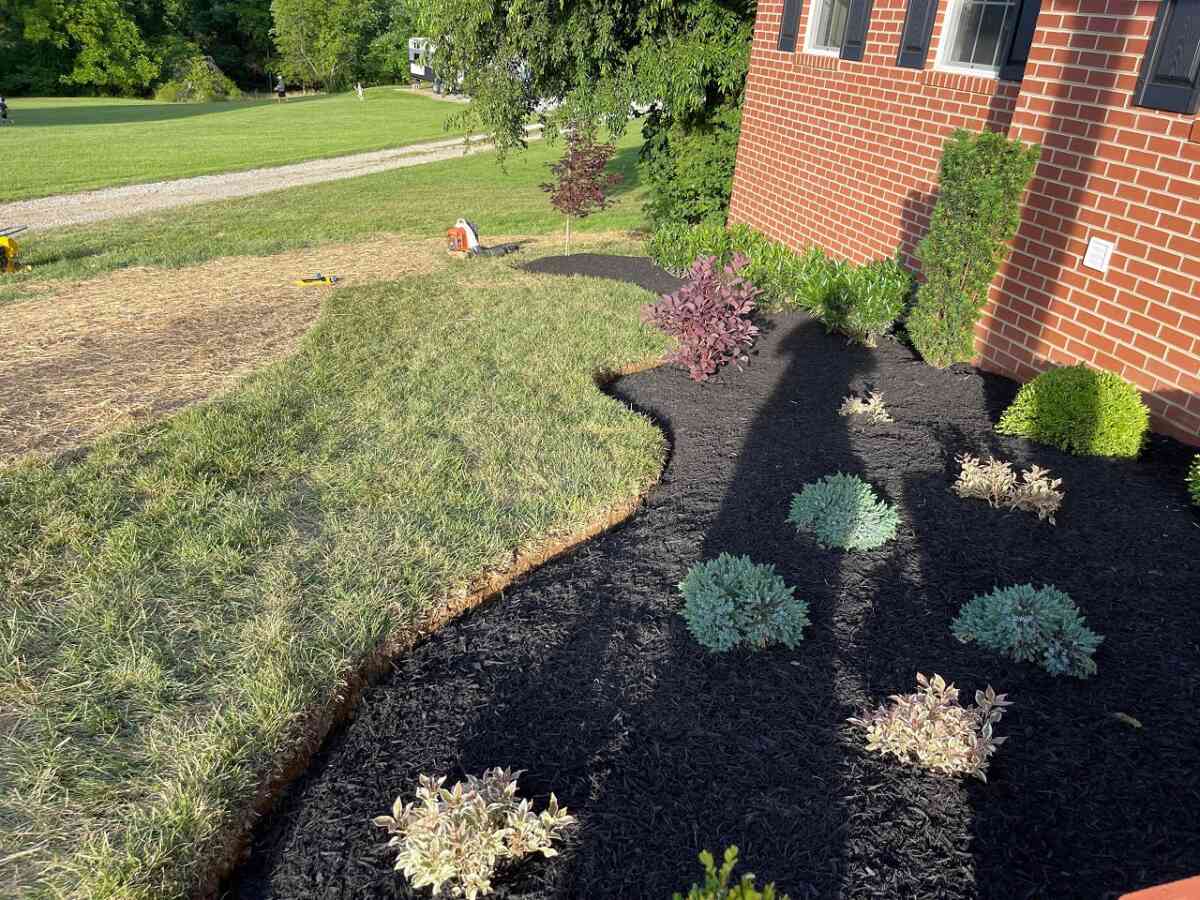
Should you replace mulch with rock?
Consider rock for a relatively stable decorative area where you can manage debris and do not expect frequent digging. Organic mulch is often the more practical starting point for beds with changing flowers, shrubs, or soil-care needs. You can also use both in separate, clearly defined areas.
Rock does not eliminate weeds, act as pest protection, or turn a wet bed into a drainage system. Organic mulch does not need to be completely replaced on an automatic yearly schedule. Both decisions should start with the conditions in the bed, rather than a general promise of less work.
In this guide, “mulch” means an organic surface covering such as bark or wood chips. Technically, decorative stone used to cover soil is also a type of mulch. The comparison is between those two surface systems, not between loose stone, a paver patio, and a retaining wall.
University of Maryland Extension lists stone as a lasting covering useful for special plantings, including rock gardens. UNH Extension recommends organic mulch for annual and perennial gardens and notes that stone is inconvenient where cultivation is needed. Those recommendations support choosing by use rather than treating either material as the winner everywhere. Maryland mulch guidance; UNH’s selection guide; cultivation considerations.
Which kind of bed are you planning?
Choose the description that comes closest. This guide explains a starting point; it does not score the property or replace a site assessment.
Begin with the planting routine.
If you regularly replace annuals, divide perennials, or move plants, ask how easy the surface will be to pull back and restore. Organic mulch is a useful starting option. A stone-covered bed should be considered alongside the repeated work of clearing the planting spot, keeping excavated soil separate, and returning the stones afterward.
Before deciding: mark the plants you expect to change and the spaces that will need access.
Stone may fit a lasting layout.
A small display area with limited planting changes can be a reasonable place to compare decorative stone options. Review the amount of falling debris, how the edge meets the lawn, and what cleanup will look like. Describe the exact stone and intended area in the quote rather than asking for “river rock everywhere.”
Before deciding: request a sample and a plan for containment, access, and future maintenance.
Look at roots and leaf cleanup first.
Take a photo of the trunk base, existing surface, and surrounding bed. Ask how the work will avoid changing root conditions or burying the trunk. Compare the cleanup required after leaves fall with the upkeep of an organic surface. A decorative tree ring should not dictate how much cover is piled inside it.
Before deciding: get the tree and proposed bed changes reviewed where roots or existing levels are a concern.
Assess the water problem before the finish.
Record where water enters, where it collects, and what leaves the area during rain. A surface-material choice is not enough to specify a drainage repair or erosion solution. Ask for the cause and proposed work to be explained before choosing the final cover.
Before deciding: separate the water-management scope from the decorative-material scope.
For plant selection and an adaptable design, see Maryland Extension’s landscape design guidance. The recommendations above apply its planning principles to the material decision.
Rock versus organic mulch at a glance
| Question | Decorative rock | Organic mulch |
|---|---|---|
| What happens to the material? | It remains as a mineral surface; movement and debris still need attention. | It gradually breaks down; evaluate coverage and total depth before adding more. |
| Will I dig here often? | Plan to clear stones away and keep them separate from excavated soil. | Generally easier to pull back while changing a planting. |
| Does it eliminate weeds? | No. Debris and soil among stones can support new weeds. | No. Coverage can suppress weeds, but monitoring remains part of bed care. |
| What about heat? | Consider stone size, exposure, soil temperature, and nearby plants. | Wood chips buffer soil temperature; their sun-exposed surface can still get hot. |
| What care am I budgeting for? | Debris removal, weeds, displaced stones, and occasional repair or replenishment. | Weeds, redistribution, edging, and additional mulch where actually needed. |
| Does it fix drainage? | The surface alone does not establish a solution for the bed’s water problem. | Moisture conservation does not establish a solution for standing water. |
| What if I change the layout? | Include removal, separation, handling, and a destination for the stone. | Include the existing layer and any removal or redistribution needed. |
The sections below explain the horticultural evidence and practical implications behind this comparison. Cost and labor depend on the particular project.
A lasting surface can suit a lasting layout.
Stone can make sense when the bed’s outline and planting plan are unlikely to change much. The question is whether the whole installation supports that plan. Plants still grow in soil below the surface. Their needs do not disappear when the visible cover changes.
List the plants you want to keep, the ones you may move, and any areas that need regular digging. Then review the stone choice with those uses in mind. A photograph of widely spaced plants in gravel is not evidence that the same arrangement fits your soil or exposure.
Ask what the stone actually is. University of Maryland Extension cautions that limestone-containing stone can alter soil pH. A color name does not identify its geology. Stone selection and soil pH.
Decomposition is part of its job.
Organic mulch gradually returns material to the soil system as it breaks down. UNH Extension includes nutrient contribution among its benefits and favors organic covers in flower gardens. That process helps explain why disappearance is not automatically a defect. Organic mulch in planted gardens.
The useful maintenance question is whether coverage is still adequate and the layer is still appropriately shallow. Faded color does not tell you the total depth. Pull back a small accessible section and measure the material already there before ordering a fresh layer.
For a bed with regular planting changes, choose the surface alongside the way you garden. If you want to build a more densely planted landscape, also consider how the amount of exposed bed will change as plants mature.
Is rock always hotter than mulch?
Not in every sense. The temperature at the surface and the temperature in the soil are different measurements. Colorado State Extension explains that gravel can transfer more heat into the soil than wood chips, while sun-exposed wood mulch can have a hotter surface than gravel. Stone size and growing conditions also affect comparisons. CSU’s explanation of heat and mulch.
That is why a simple “rock gets hot” warning is incomplete, and a claim that light-colored stone always solves the problem is also too broad. Look at the actual bed: when it gets sun, what surfaces surround it, and which plants must grow there.
Maryland Extension notes that heat and light reflected from hard surfaces can change a planting site’s exposure. When the bed sits beside a sunny wall or pavement, include that context in the design conversation. Matching plants to site conditions.
A useful request is, “Review this plant list for this side of the house before choosing the cover.” It is more specific than asking whether all rock is good or bad for plants. Avoid selecting plants solely because they appear beside stone in a reference photo.
The maintenance you are trading
Rock needs cleanup. Mulch needs depth checks.
A stone bed avoids the same decomposition cycle as wood mulch, but the surface still receives leaves, clippings, dust, and soil. Maryland Extension explains that accumulated material between stones can support weed germination. A clean-looking installation is the beginning of a maintenance plan, not the end. Why weeds return among stones.
Before installing rock beneath a tree or beside a lawn, ask how debris will be removed. Review the stone size with the equipment you expect to use. A cleanup method that works on one surface may disturb another. Try it on a small area before assuming a powerful blower or aggressive rake is the answer.
For organic mulch, assess existing depth rather than scheduling a full replacement because a year has passed. Maryland Extension recommends shallow layers around trees and shrubs, generally one to three inches, and keeping material away from trunks. Additional cover should account for the layer that remains. Depth and trunk-clearance guidance.
If weeds are the main reason you want to switch, look at where they grow now. Are they coming through existing vegetation, appearing in bare spots, or rooting in material on the surface? Those observations help define the preparation and upkeep you need. Simply putting a different cover over the same problem leaves the question unresolved.
Also consider who will do the work. If you manage the beds yourself, compare the jobs you find manageable. If you hire maintenance, ask for the expected service scope for each option. “Low maintenance” should be translated into actual tasks, frequency, and access before it influences a purchase.
Landscape fabric is not a permanent weed guarantee
Illinois Extension explains that fabric can restrict water and air movement, become less permeable as particles accumulate, and still allow weeds to establish above it. Planting changes also mean cutting or working around the material. These are limitations to discuss, not a universal deadline for failure. Landscape fabric’s limitations.
If a stone proposal includes fabric, ask what function it serves in that specific area, which product is specified, and how planting and maintenance will work around it. A planted garden bed and a constructed gravel path are different installations. Do not let one generic “weed barrier” description stand in for both designs.
For more detail on that separate question, read water movement through landscape fabric. Keep the decision tied to the site and intended use.
Decorative rock is not a drainage repair
Spaces between stones are only one part of a water-management question. The soil below, the existing levels, the source of water, and where it can go all matter. Covering the surface does not identify the cause of standing water or specify how to correct it.
CSU’s guidance describes differences in infiltration between smaller gravel and larger rock, particularly in dry-climate landscapes. That is useful evidence that “rock” is not one uniform system. It should not become a promise that spreading any river rock over any Maryland bed improves drainage. Particle size and water movement.
Describe the actual concern before choosing the finish. Take photographs during rain if you can do so safely. Show the downspout, the receiving bed, and the area where water collects. Ask whether the proposed work is decorative coverage, changes to the bed, or a separately designed water-management feature.
Keep four different jobs separate
A decorative stone bed covers a surface. A garden border defines an edge. A drainage feature manages water. A retaining wall supports a difference in soil levels. They may be designed together, but choosing a stone color does not specify all four.
Does stone keep termites and other pests away?
Do not buy decorative stone as termite protection. UF/IFAS discusses termite activity under inorganic ground covers and emphasizes maintaining a house’s protection measures. Material choice does not replace those measures. Termites and ground covers.
If termites are the reason for changing a foundation bed, start with identification and a licensed inspection. Our mulch and termite guide explains the distinction between insects in a landscape and activity affecting a building. Bring any bed-clearance or equipment-access instructions into the landscape plan.
Put each surface where it has a clear job.
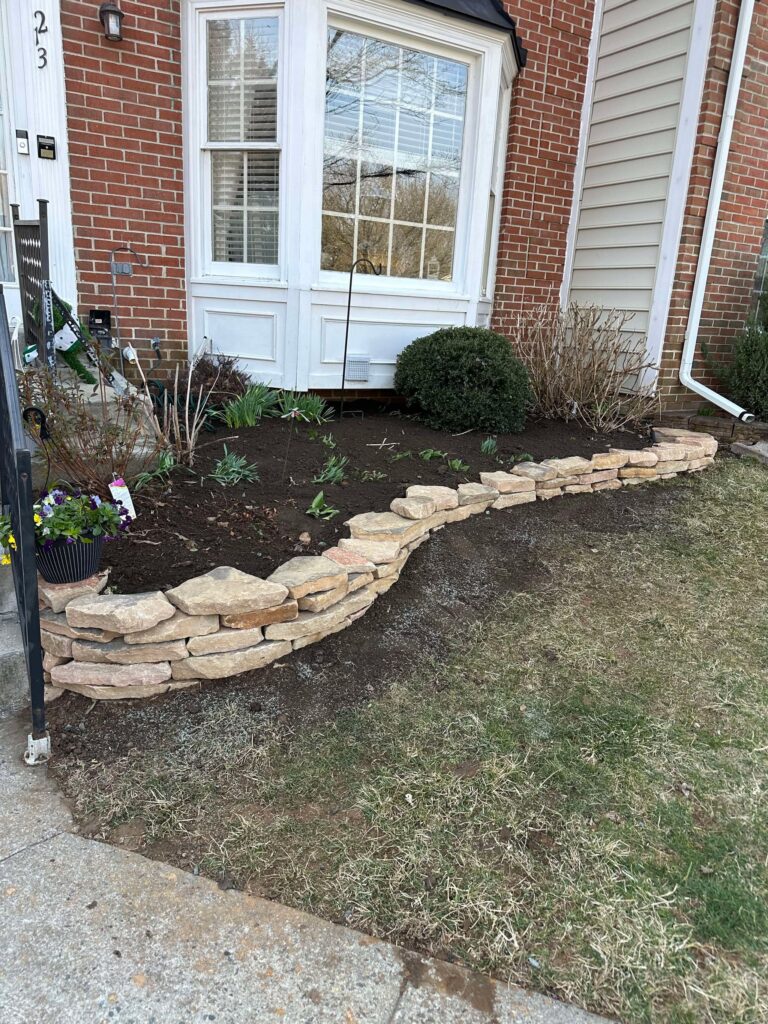
You do not need one cover across every bed. A design can retain organic mulch in an actively planted area and use decorative stone in a separate display strip. A stone border can define a mulched bed without replacing its surface.
Sketch the boundary between the materials before ordering them. Ask how the edge will contain each surface, how it meets the lawn or path, and how you will reach the plants. Avoid creating tiny decorative patches that are awkward to maintain simply to fit in another material.
If you want less exposed mulch over time, review the planting plan too. Maryland Extension explains that plants covering more of the ground can reduce weed growth and the need for repeat mulching. That requires species and spacing suited to the site. A more fully planted landscape.
See garden border options for the edge, and alternatives to exposed mulch for the larger design.
Plan the conversion before moving materials
A mulch-to-rock conversion should be specified as a bed project, not simply a delivery. Decide what stays, what changes, and how the work will be completed without losing access to plants or the building.
Record the bed and plants you are keeping
Photograph the whole area and its edges. Mark plants, tree roots visible at the surface, irrigation, lighting, and other equipment. Identify which planting spaces will need future access. If the bed is beside the house, include the building edge in the review.
Resolve existing weeds and site concerns
Identify the weeds before choosing a removal approach. Maryland Extension emphasizes controlling existing vegetation when renovating beds and minimizing unnecessary disturbance. Persistent perennial weeds can require a different plan from a few young seedlings. Preparation before a bed renovation.
Specify what happens to the old layer
Ask whether existing mulch, fabric, or edging will be removed, redistributed, or retained, and why. Confirm disposal and cleanup. Adding stone on top of an unreviewed bed does not explain the intended finished level or the condition beneath it.
Choose the actual stone and the finished layout
Request a sample, the product name, particle-size information, the coverage area, and the proposed depth. Confirm the edge detail and access route for installation. Volume, weight, and delivery requirements depend on that specification; a photo alone cannot supply them.
Check the result and agree on care
Walk the bed with the contractor. Review the edges, plant access, equipment locations, and cleanup. Ask how to handle leaves, weeds, displaced stones, and any later planting. Keep the product and installation details with your maintenance records.
Our river rock installation guide goes further into the planning questions. If the work involves removing an existing stone surface instead, see landscape rock removal and reuse.
How much material will the bed need?
Measure the area receiving cover, excluding surfaces that will remain uncovered. For an irregular bed, divide it into simpler shapes or measure it from a scaled plan. Agree on the layer depth before converting that area into a quantity.
The basic geometric volume in cubic yards is square feet multiplied by depth in inches, divided by 324. That measures volume, not stone weight. If stone is sold by the ton, use the supplier’s product-specific conversion and account for the actual installation scope. Do not use one generic density for every stone.
Ask whether the quote includes removal, preparation, edges, the selected material, delivery, installation, and cleanup. A low material-only price and a complete installed price describe different purchases. Compare the same bed and the same list of work before judging which is cheaper.
Compare costs over the years you plan to keep the bed
Enter two matched installed quotes and your expected annual upkeep budget for each option. The calculator shows the arithmetic behind the comparison. It does not supply local prices or assume that stone has no maintenance cost.
Your cost comparison
Enter matched quotes and planned upkeep costs, then choose “Compare my costs.” Five years is the starting comparison period, not a recommended service life.
| Included cost | Rock | Organic mulch |
|---|---|---|
| Initial installation | ||
| Planned upkeep | ||
| Modeled total |
Formula for each option: initial installed cost + (annual upkeep budget × full years). No inflation, financing, or discount rate is applied. Unentered one-time repairs, future removal, and the value of your own labor are excluded. The graph shows installation at year zero, followed by each full year.
Read the result alongside the scope
A smaller modeled total does not establish a better planting environment or an easier job. It shows what the numbers you entered add up to. Check the care assumptions before making a decision from the chart.
If you do the maintenance yourself, a zero cash budget can be reasonable for the calculation, but your time still matters. Write down the recurring tasks next to the result. Compare whether you would rather measure and redistribute mulch or clean debris from stones, and consider how often the bed needs new planting.
If a major task happens only occasionally, do not quietly treat it as a guaranteed annual bill. Either use an annual average and explain the assumption, or evaluate that task separately. The calculator intentionally uses a simple constant budget so the comparison stays visible and understandable.
It also does not include removing the material at the end of the period. If a redesign is likely, ask for that work to be discussed before installing a long-lasting stone surface. The initial installation and a later conversion are separate decisions.
Questions before switching to rock
Can I put rock directly over old mulch?
Review the existing layer first. Ask what will remain, why it will remain, and how the intended surface level will be achieved. A proposal should describe the preparation rather than assume that covering the existing bed is suitable everywhere.
Will rock stop weeds permanently?
No. Material collecting among stones can provide a place for new weeds to grow. Include initial weed management and ongoing monitoring in the plan. A deeper stone layer or fabric should not be sold as a substitute for all future care.
Is river rock better than gravel?
Ask for the actual product and intended use. Names can describe different sizes and mixtures. Compare samples, size, movement, cleanup, and planting access. A decorative surface and a walking surface need different reviews.
Do I need to replace mulch every year?
Measure the remaining layer and assess coverage first. An annual visit to inspect and maintain a bed does not require a full annual replacement. Agree on the work actually needed rather than adding the same depth automatically.
Can I use rock around shrubs?
Review the shrubs’ site requirements and the proposed surface together. Consider exposure, future digging, irrigation access, and debris. The fact that stone remains in place does not mean every shrub is suited to every stone-covered bed.
Is a stone border the same as replacing mulch?
No. A stone border defines the edge. Replacing mulch with rock changes the bed’s surface. You can keep an organic-mulch bed inside a stone border, as the photograph above illustrates.
What should I send for a useful estimate?
Send wide photos, approximate bed measurements, the plants you want to retain, a photo of the current surface, and your maintenance priorities. Mention water concerns, tree roots, equipment, and any building-edge instructions. Ask for removal, preparation, edging, material, delivery, installation, and cleanup to be itemized.
Plan your beds with The Detail Guys
The Detail Guys is based in Edgewood and serves Harford and Baltimore counties. Discuss the planting beds, garden borders, and surrounding landscaping you want to improve. Bring photos and explain how you would like to maintain the area.
A useful plan identifies the material, the preparation, and the work that will keep the bed practical after installation.