 Skip to content

The Complete, Research-Backed Guide for Homeowners
Updated February 2026 | 26-Minute Read
Does landscaping increase home value? Yes, and the numbers are more compelling than most homeowners expect. Well-landscaped homes sell for 5% to 20% more than comparable properties with little or no landscaping, according to the American Society of Landscape Architects. A multi-state Virginia Tech study found that moving from no landscaping to a well-designed yard added between $16,500 and $38,100 to a $300,000 home.
This guide pulls from peer-reviewed university studies, U.S. government agency data, and surveys from major real estate organizations to give you an honest, comprehensive look at exactly how landscaping affects your home’s market value. We cover the statistics, the science, the specific projects worth your investment, and the ones you might want to skip.

Let’s start with the headline numbers, because they are worth pausing on.
A landmark multi-state study published in the Journal of Environmental Horticulture found that compared to homes with no landscaping at all, well-landscaped properties commanded a price premium ranging from 5.5% in Louisiana to 11.4% in South Carolina. In Michigan, the gap between the least-valued and most-valued landscape was 12.7%. On a $300,000 home, that translates to an extra $16,500 to $38,100 in value. That is a significant swing from what is essentially a garden.
This research, synthesized by Virginia Tech horticulturist Alex Niemiera, is available directly through Virginia Cooperative Extension: The Effect of Landscape Plants on Perceived Home Value. It is one of the most cited academic resources on the topic and worth bookmarking if you are serious about maximizing your outdoor investment.
The American Society of Landscape Architects (ASLA) estimates that quality landscaping can boost a home’s overall value by 15% to 20%. Real estate professionals seem to agree: a survey of 350 realtors found that 97.7% believe good landscaping improves home value by at least 5%, and 56.3% believe it can push value up by 15% or more. A notable 22.6% think great landscaping could move the needle by as much as 30%.
That is not a fringe opinion. That is a broad consensus across the real estate and horticulture industries, backed by decades of independent academic research.
Home value increase from sophisticated landscaping (Virginia Tech)
Estimated value boost from quality landscaping (ASLA)
Realtors who say good landscaping improves home value by at least 5%
Size of the global landscaping services industry in 2024
Government agencies are not exactly known for being enthusiastic, so when federal researchers produce study after study supporting the value of landscaping and trees, it is worth paying attention.
The U.S. Department of Agriculture Forest Service has published multiple studies quantifying the economic benefits of urban trees. Key findings include:
A national meta-analysis published by the USDA Forest Service Research and Development used 21 hedonic property value studies and 157 unique observations to confirm that tree cover consistently increases home values, with the effect being even larger for off-property tree cover than on-property, suggesting trees function as a public good that benefits entire neighborhoods.

The U.S. Environmental Protection Agency’s Green Infrastructure program notes that open green spaces, parks, vegetation, and landscaping provide environmental and social benefits that create neighborhoods where people want to live, and that desire translates directly to higher property values.
The EPA’s Urban Street Trees and Green Infrastructure page also documents the connection between tree canopy and residential sales prices, citing specific studies including a 2020 examination of green infrastructure’s effect on home sales in Omaha, Nebraska.
For every dollar invested in tree management in multiple studied cities, annual benefits returned between $1.37 and $3.09. That is not just a good investment. That is a reliable one.

A study commissioned by the Arbor Day Foundation and the USDA Forest Service, conducted by the University of Nebraska’s Bureau of Business Research, found that trees collectively add more than $31.5 billion annually to private home property values nationwide. The study also found that neighborhood trees provide over $73 billion in broader environmental benefits to communities each year.
Not all landscaping delivers the same return. The National Association of Realtors (NAR) 2023 Remodeling Impact Report on Outdoor Features is the gold standard for understanding which specific projects move the needle.
Here is the one that makes everyone do a double-take. Standard lawn maintenance, the kind that includes regular fertilizing and weed control treatments, delivers a 217% return on investment. That means for every dollar you spend keeping your lawn healthy and green, you get back more than two dollars when you sell.
According to NAR, the average cost to maintain a 2,835-square-foot lawn runs about $4,800 per year. That is not a small number, but the return more than justifies it. A separate NAR figure puts the ROI on general landscape maintenance at 104%, confirming that even basic upkeep pays for itself and then some. In a 2023 joint study by the National Association of Landscape Professionals and NAR, standard weed control and fertilization alone yielded a ROI of nearly 217%.
Trees are the gift that keeps giving, partly because they grow in value over time in a way that most home improvements do not. The Arbor Day Foundation estimates mature trees increase property values by 3% to 15%. The Council of Tree and Landscape Appraisers pegs the appraised value of a single mature tree at $1,000 to $10,000.
In a study of New York City’s urban trees, individual trees were found to add $24 to $155 in property value per tree, depending on species, plus an average $78 in stormwater management benefits per tree. NAR’s 2023 study puts the overall ROI of tree care at 100%.
Placement matters enormously. Trees placed to shade a home’s south and west walls reduce air conditioning needs by up to 30% and can save 20% to 50% on heating costs, according to the USDA. Strategically planted trees save money before you ever list the home.
A modern irrigation system tells potential buyers two things at once: the current owner cared enough to invest in the yard, and they will not need to drag hoses around to keep things alive. NAR’s 2023 data puts the ROI at 83%, and homeowners give this project a joy score of 9.4 out of 10, meaning they love it while they live there and recoup most of the cost when they sell.
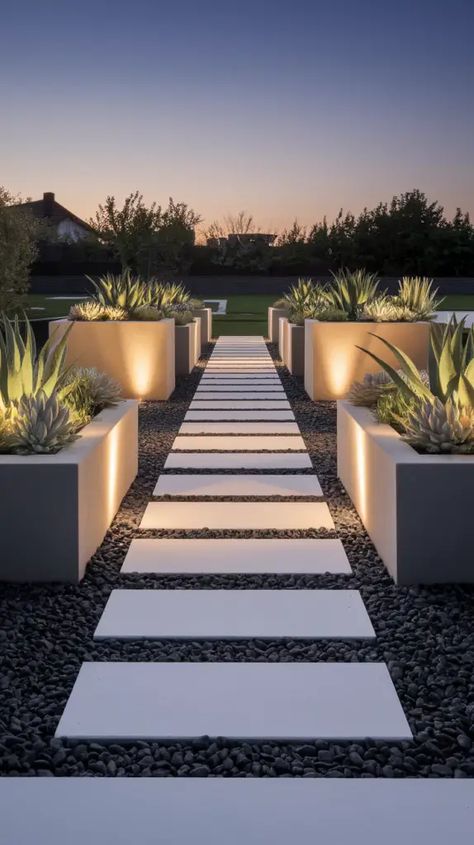
Outdoor lighting is one of the more affordable landscaping upgrades, typically running $3,500 to $4,500 for a quality installation, and it delivers on multiple fronts. It extends the usability of outdoor spaces after dark, adds a safety and security dimension that buyers appreciate, and dramatically improves a home’s nighttime curb appeal. NAR puts the ROI at 59% and notes that it adds around $2,500 to home value. LED lighting systems tend to perform best.
Patios typically return about 95% of their installation cost according to real estate surveys. Walkways made from natural flagstone, priced at around $2 to $6 per square foot, can provide a 100% ROI when paired with complementary softscaping elements like mulch and flowers. Fire pits carry an ROI of around 56% but have a 94% popularity rating among buyers surveyed by ASLA, meaning they may attract more showings even if they do not directly add dollar-for-dollar value.
A complete professional landscape overhaul costs around $9,000 on average and can yield a ROI as high as 100%. The Virginia Tech research cited earlier found that design sophistication is the single highest-ranked factor buyers look for in a home’s exterior, ranking above plant size and maturity. This means it is not just about having plants, it is about having a cohesive, professionally considered design.
Numbers tell part of the story. But there is a real psychological dimension to landscaping that is worth understanding, because it explains why the numbers are so consistently strong across different markets, climates, and home types.
A study by the National Association of Realtors found that 71% of homebuyers consider curb appeal when buying a home. That means before a buyer ever steps inside, more than seven in ten have already formed a strong impression based on what they see from the street. That impression is sticky. Research in consumer psychology consistently shows that first impressions shape the interpretation of everything that follows. A buyer who drives up to a well-landscaped home arrives in a different mental state than one who pulls up to bare dirt and overgrown shrubs.
Ken Sisson, a real estate professional in Los Angeles, put it this way: great landscaping can be the thing that prompts just one more buyer to throw their hat in the ring with an offer. And as he points out, homes with multiple offers sell at higher prices and typically above list price. The landscaping is not just adding appraised value, it is generating competition, and competition is what drives price up.
According to a study by the University of Alabama and the University of Texas at Arlington, curb appeal could account for 7% or more of a home’s total value. A Michigan State University study found homes with high-quality landscaping can sell for 5% to 11% more than homes with average landscaping.
There is also the signaling effect. A well-maintained yard tells buyers, without a single word being spoken, that the home has been cared for. It implies the rest of the property is in good shape too. Conversely, a neglected exterior creates doubt and hesitation that is hard to overcome, no matter how beautiful the kitchen is.
The research does not just show the upside. It also documents the downside, and it is significant.
A study published in the Journal of Environmental Horticulture found that poor landscaping can cause property values to drop by as much as 10%. Homes that have clearly been neglected, with patchy lawns, overgrown shrubs, dead plants, or no landscaping design whatsoever, face a penalty at sale. The Virginia Tech research found that even minimal landscaping with only small, unsophisticated plants can actually detract from a home’s value compared to a lawn-only approach. Trying and failing, in landscaping terms, may be worse than not trying at all.
Other landscaping choices that can backfire include large swimming pools in cooler climates (buyers see ongoing maintenance costs), artificial turf (raises eco-friendliness concerns and can overheat), and highly specific or personalized landscaping that appeals to a narrow taste. The goal is always to appeal to the broadest possible buyer pool.
Trees, for all their value, can also hurt a property if planted in the wrong place. Oak, ash, and poplar trees planted too close to a foundation can cause root damage over time. Ivy on exterior walls sounds charming but can lift roof tiles and separate brickwork. The key is strategic planning, not just planting.
One of the most underappreciated aspects of landscaping as a home investment is that unlike a kitchen remodel, which depreciates immediately after installation, landscaping typically increases in value over time. A sapling planted today is worth more in ten years. A young hedge planted along a property line fills out and adds privacy and beauty as the years go by. Mature plants command higher perceived value than immature ones, as confirmed by the Virginia Tech research, which found plant maturity and size to be the second most important factor after design sophistication in determining perceived home value.
This means early investment in landscaping is almost always smarter than waiting. If you are planning to sell in five to seven years, the trees and shrubs you plant now will be meaningfully larger and more established by the time you list. The ROI on early planting compounds in a way that few other home improvements can match.
The appeal of DIY landscaping is obvious. You save on labor costs and maintain complete creative control. And for simpler projects like mowing, mulching, and planting flower beds, DIY can absolutely work. But for more complex design work, the data consistently shows that professional landscaping delivers a stronger return.
Professional landscaping can yield a return of 20% to 30% of a home’s overall value, according to industry data. A professionally designed and executed landscape signals quality to buyers and appraisers in a way that DIY projects, however well-intentioned, often cannot replicate. The Virginia Tech study specifically found that design sophistication is the top driver of perceived value, and that sophistication is difficult to achieve without professional input.
The ASLA recommends homeowners invest between 10% of their home’s value on landscaping. For a $350,000 home, that is $35,000, which sounds like a lot until you consider that a 15% value increase on that same home would equal $52,500, more than covering the investment.
A reasonable middle path: hire a professional landscape designer for the overall plan and plant selection, then handle routine maintenance yourself. You get the design credibility without paying for ongoing labor.
One of the most compelling trends in residential landscaping is the shift toward native plants, and the financial case for them is strong alongside the environmental one.
Native plants, those that grow naturally in your region, require significantly less water, fertilizer, and maintenance than non-native species. Over a 20-year period, maintaining an acre of native plants costs approximately $3,000, compared to $20,000 for non-native plants over the same period. That is not a small difference. It is a $17,000 savings.
Native plants also appeal strongly to the growing segment of buyers who prioritize low-maintenance, sustainable properties. They provide habitat for local wildlife, which adds visual interest and ecological value that resonates with an increasingly eco-conscious buyer pool. They are also more resilient during droughts and extreme weather, meaning they look better with less intervention, which is exactly what buyers want to see.
The EPA’s Local Governments and Trees page provides resources on native plant selection and tree planting programs by region, including links to state and city-specific approved plant lists.
It is worth separating two things that homeowners sometimes conflate: market value and appraised value. When you sell a home, buyers are responding to their own perception of value, which is heavily influenced by curb appeal and landscaping. But appraisers also weigh in, and landscaping factors into their assessment too.
Appraisers consider the overall condition and appearance of a property when assigning value. A neglected exterior can lead an appraiser to question the condition of the property more broadly, creating a downward pull on the formal valuation. A well-maintained, thoughtfully landscaped exterior sends the opposite signal, supporting a higher appraisal.
The Appraisal Institute has noted that curb appeal is one of the best ways for property owners to make a positive first impression, and that this impression influences how appraisers perceive the overall care and condition of a property. This is not about gaming the appraisal process. It is about accurately representing what a well-cared-for home is worth.
The short answer is yes, though perhaps less dramatically than you might expect. The Virginia Tech multi-state study found value increases from landscaping across all studied states, ranging from 5.5% in Louisiana to 11.4% in South Carolina. The variation likely reflects regional buyer preferences, climate considerations, and existing neighborhood norms.
In warmer, sunnier climates where outdoor living is a year-round possibility, features like patios, outdoor kitchens, and shade trees tend to carry stronger premiums. In colder climates, buyers may place more weight on hardy perennial plantings and seasonal color than on elaborate outdoor living spaces.
Water is also an increasingly important variable. In drought-prone regions like the American Southwest, water-wise landscaping using drought-tolerant native plants, drip irrigation, and minimal turf is not just environmentally responsible, it is also what buyers in those markets specifically want. Installing a lush, water-hungry lawn in Phoenix is not the same investment as the same lawn in Portland, Oregon.
The key principle across all regions is the same: landscaping that fits the local climate, requires manageable maintenance, and uses a cohesive design approach will perform well regardless of geography.
Beyond aesthetics, landscaping delivers measurable environmental benefits that increasingly matter to buyers and that also lower the ongoing costs of homeownership, making a well-landscaped property more attractive on multiple levels.
Trees and vegetation reduce household energy costs in ways that show up on monthly utility bills. The USDA Forest Service estimates that properly placed trees can reduce air conditioning needs by 30% and cut heating energy use by 20% to 50%. The net cooling effect of a single healthy tree is equivalent to ten room-sized air conditioners running 20 hours a day. A buyer looking at two otherwise identical homes will notice when one has established shade trees and one does not.
Landscaping also manages stormwater effectively. Trees intercept rain before it hits impervious surfaces, reducing runoff and the erosion and flooding risks that come with it. This matters to buyers in flood-prone areas and to municipalities that increasingly factor stormwater management into permitting and incentives.
The EPA’s Benefits of Green Infrastructure page documents how vegetation and landscaping reduce flood damage costs, improve air quality, and support neighborhood safety, all of which feed back into property values. The EPA explicitly notes that open green space and landscaping help create neighborhoods where people want to live, and that preference is always reflected in home prices.
From a purely financial perspective, a home with mature trees that demonstrably reduce energy costs is a more efficient and less expensive home to own. That efficiency has real dollar value to buyers who are thinking not just about the purchase price but about what they will spend to live there month after month.
If you are working with a limited budget and want to maximize your return, here is how to think about where to focus your landscaping investment:
Before anything else, get your lawn in excellent shape. Regular mowing, fertilizing, aeration, and weed control deliver the highest ROI of any landscaping project at 217%.
Your front yard is the first thing buyers see. Invest here first: fresh mulch, healthy shrubs, a clear pathway, and well-placed specimen plants.
If planning to stay for more than three years, plant trees now. Their value grows continuously. Choose native species for shade and energy efficiency.
An in-ground irrigation system signals care and makes the home appealing to buyers who do not want to babysit watering schedules. 83% ROI.
Just as important as knowing what to invest in is knowing what to avoid. Some landscaping choices can actively turn buyers off or fail to deliver any meaningful return.

Here is a consolidated summary of the key statistics from this research:
After going through all of this research, I want to give you a straightforward recommendation, the kind a knowledgeable friend might offer rather than a carefully hedged industry answer.
If you are planning to sell your home within the next two to seven years, I would strongly suggest prioritizing your lawn first, then your trees, then your front yard’s overall design cohesion before spending money on any interior renovation. The returns from basic lawn care at 217% ROI outperform almost every kitchen or bathroom upgrade you could make. That is not an opinion, it is what the data consistently shows.
If you have a longer time horizon, plant trees now. The compounding value of a well-placed, healthy tree growing on your property is one of the better financial decisions a homeowner can make, and you get to enjoy the shade, the birds, and the beauty in the meantime.
And if you are unsure where to start, consult a certified landscape designer for even a single planning session. The Virginia Tech research is clear that design sophistication matters more than the size of your budget. A thoughtful plan executed on a modest budget will outperform an expensive but incoherent one every time.
Your yard is not just your home’s first impression. It is one of your most reliable financial assets. Treat it accordingly.
All claims in this article are backed by the following research and governmental sources:
USDA Forest Service: Research Helps Quantify the Value of Trees in Communities
USDA Forest Service Research: Tree Cover and Property Values in the United States (Meta-Analysis)
USDA Forest Service: Street Trees Increase Value of Portland Homes by More Than $1 Billion
U.S. EPA: Economic Benefits of Green Infrastructure
U.S. EPA: Urban Street Trees and Green Infrastructure
U.S. EPA: Benefits of Green Infrastructure
U.S. EPA: Local Governments and Trees
University of Nebraska / Arbor Day Foundation: Trees Have $31.5 Billion Impact on Home Values
Disclaimer: This article is for informational purposes only. Return on investment figures vary by region, market conditions, and project quality. Consult a licensed real estate professional or appraiser for advice specific to your property.
Online