 Skip to content

How to Keep Landscaping Rocks in Place
Start by finding out why the rocks move. Loose stone spilling onto the lawn usually calls for a review of the edge and finished stone level. Gravel shifting under feet needs a surface and support review. Rocks washing downhill need a runoff and slope review. Glue is not a universal fix for all three.

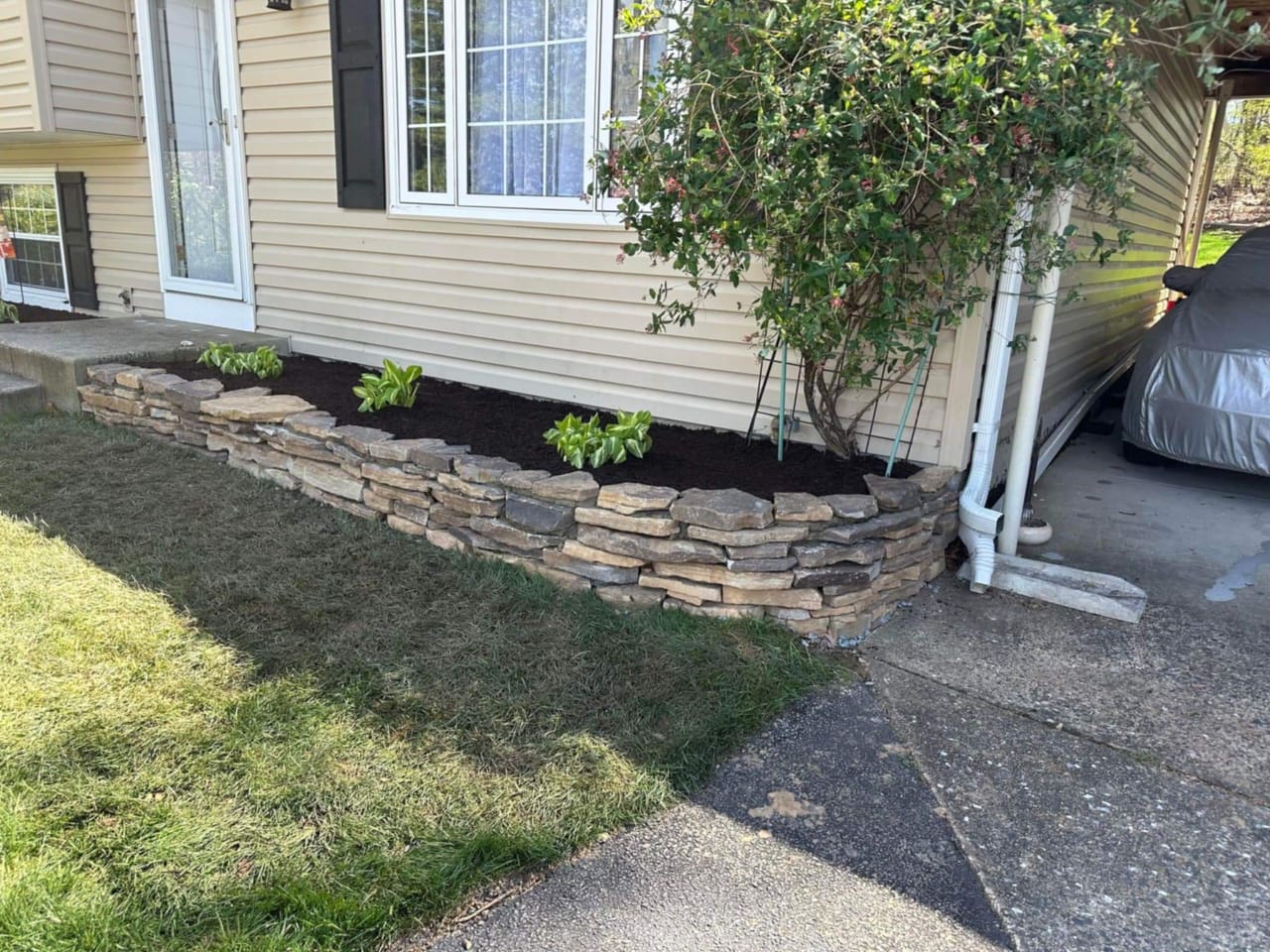
Find the pattern before buying a fix.
Look at where the displaced stones collect and when they move. Take photographs after normal use and, from a safe place, after rain. A repair based only on the stones’ final resting place can miss the source of the problem.
Across the edge
Stones collect on grass or pavement beside an otherwise intact bed.
Review: missing edging, open joints, damaged sections, an overfilled bed and routine foot or tool contact.
Within the surface
Footprints, ruts or hollows appear where people walk or equipment passes.
Review: intended use, stone shape, loose-layer depth, ground support and whether the surface needs a designed stabilization system.
After water flows
Rock and sediment collect downhill, below a downspout or at a low point.
Review: water source, flow route, erosion beneath the rock and the condition of the receiving area.
A sinking boulder or moving wall is a different problem. Keep people away from an unstable feature and arrange qualified assessment. A decorative edging repair is not a design for retaining soil, supporting a boulder or stabilizing a slope.
For a bed beside a house, note the nearby foundation, doors, drains and downspouts. For a path, note how it is used. Those details matter more than choosing the strongest-sounding adhesive.
A border can be present and still be overfilled.
The top of the loose stone and the top of the border work together. If stone is piled to or above the edge, the border may offer little containment at that point. Select a view to compare the concept.
In this conceptual view, stone rises above the border. Review overfilling and displacement before assuming the border needs to be taller.
Containment needs a continuous detail.
Look for low spots, gaps at connections, leaning pieces and damaged corners. The repair may be resetting a section, changing the finished stone level or replacing an unsuitable edge. Do not hide a failed border beneath another load of stone.
Use the chosen edging system’s installation instructions. For example, Colmet’s attached-stake guide describes connecting and securing its sections with the supplied stakes. That product detail does not establish a universal stake spacing for every metal or plastic edge.
Containment must fit the surrounding space.
A higher edge may affect mowing, create a trip point or change where water collects. Review how the border meets the lawn and path, and how the bed receives and releases water.
The Detail Guys’ garden border service is a relevant starting point for bed containment. If the feature must hold back soil where ground levels differ, discuss a retaining-wall assessment instead.
Choose stone and support for the actual use.
A decorative planting bed, walking path and vehicle-bearing gravel area are not interchangeable construction details. Name the intended use before settling on the stone or the layers beneath it.
| Option | Where it may fit | What to verify |
|---|---|---|
| Loose decorative stone with edging | A contained bed that is not intended as a regular walking or driving surface. | Stone size, finished level, plant access, edge continuity and runoff. |
| Angular aggregate | A surface where interlock matters, including some stabilized gravel systems. | Exact gradation, intended use and compatibility with the selected installation system. |
| Rounded pebbles or river rock | A decorative appearance where movement can be managed by the layout. | Whether shape and size suit traffic, slope and containment. Do not choose only by color. |
| Gravel stabilization grid | Some paths, parking areas or other uses covered by a specific manufacturer’s system. | Approved aggregate, base preparation, loading, edging and slope limitations. |
| Bonded stone or adhesive detail | A project specifically designed for a compatible binding product or bonded component. | Product approval, substrate, cure, water movement, maintenance and intended load. |
Nidagravel UK’s manufacturer guidance recommends angular or irregular aggregate for its grids because the particles interlock, and cautions against smooth rounded pebbles for that application. This is useful system-specific guidance, not a guarantee that angular stone will stay put on any slope.
A grid is also more than a sheet laid over soft ground. Nidaplast’s 130/140 installation overview includes ground excavation for the intended use, foundation and leveling layers, compaction, edging and specified gravel fill. Other products can require different construction. Confirm the complete system before ordering.
Landscape fabric does not fasten loose rock.
A suitable separator may be part of a specified installation, but it is not an edge restraint or a remedy for erosion beneath the bed. Do not assume fabric is always needed around established plants. Match it to the installation and review access to roots and future maintenance.
Avoid adding a generic sand or gravel layer to every bed. Ground preparation needs to suit the soil, plants, water and load. Extra layers can change finished levels without fixing the original cause of movement.
If rocks wash out, follow the water upstream.
Look for a downspout discharge, pavement shedding water, a channel entering the bed or sediment exposed beneath the stone. A taller edge at the bottom of the bed can leave the source untouched and may create ponding.
University of Maryland Extension’s stormwater resources emphasize managing runoff and recommend professional or local assistance when the problem is complicated. Decorative stone alone does not establish a properly designed drainage outlet or erosion-control system.
For recurring washout, arrange a site review that considers both where water comes from and where it can go. Do not send a problem toward a neighboring property, foundation or walking route. A gravel grid, larger stone or a decorative “dry creek” needs an appropriate site design rather than a promise based on appearance.
Measure the slope you are discussing.
Use vertical elevation change and horizontal distance, not distance measured along the sloping ground. Enter the change in inches and horizontal run in feet. This gives you a clear measurement to bring to a landscape discussion.
Slope (%) = (vertical change in inches ÷ 12) ÷ horizontal run in feet × 100. Angle = arctan(vertical change in feet ÷ run), converted to degrees. Results are rounded to two decimal places. The profile scales to fit while preserving the rise-to-run proportion.
The example of 12 inches over 10 horizontal feet is a 10% slope, not a 10-degree angle. No percentage here is labeled safe or unsafe for landscape rock. Suitability depends on stone, system, support, runoff and use.
For uneven beds, record separate sections. Two endpoints provide an average grade between them, not a survey of every hollow or abrupt change along the route. If measuring requires unsafe access, have the site measured professionally.
A repair plan that addresses the cause.
- Document the movement. Photograph the affected edge, the displaced stone and any evidence of water or repeated traffic. Note when it happens.
- Separate containment from support. Identify whether the stone crosses a boundary, shifts within the surface or settles into the ground. More than one issue may be present.
- Review water before finalizing levels. Include downspouts, adjacent hard surfaces and existing drains in the discussion. Avoid changing the grade against a building as a quick fix.
- Agree on the intended use and materials. Confirm whether the work is a decorative bed, path or another surface. Ask which product instructions apply.
- Plan the repair and follow-up. The estimate should describe removal or reuse of existing rock, support work, edging, any drainage work and cleanup. Recheck the area after use and rainfall.
Before trenching, excavation or driving edging anchors, follow Miss Utility’s safe-digging process. Its homeowner guidance also explains that notified utility owners do not mark privately owned underground lines. Plan private locating where needed, including irrigation or invisible fencing.
What to bring to an estimate
- Photos of the whole area and the problem spots.
- Bed or path dimensions and approximate stone size.
- When stones move, including rain or traffic patterns.
- Nearby utilities, roots, drains and access constraints.
What to ask the contractor
- Which cause is the proposed repair addressing?
- How will the edge meet the stone and adjacent surface?
- Does the plan include runoff or ground support work?
- What maintenance will the finished installation need?
Routine cleanup is still part of keeping rock landscaping useful. Remove accumulated debris, check border connections and correct small displacement before it spreads. For cleaning rather than containment, see how to clean landscape rocks.
Questions before you glue, stake or refill
What is the best way to stop rocks spilling into the lawn?
Review the border’s condition and continuity together with the finished stone level. An overfilled bed or open connection may need correction before a different edging material is chosen.
Should I glue all my landscaping rocks together?
No blanket adhesive recommendation fits decorative beds, paths, slopes and boulders. Use a binding product only where the complete installation and product instructions suit the intended application. It does not fix eroding ground beneath the stone.
Will larger rocks solve washout?
Changing size may be part of a design, but it does not identify the runoff source or establish stable support. Repeated washout calls for a water and site review.
Does landscape fabric keep rock in place?
It does not provide edge containment or fasten loose stones. A specified separator can serve another purpose within a system, but it does not replace suitable support or runoff management.
Can I use rebar to hold a boulder?
Do not improvise a boulder anchoring system with exposed rebar. Large or unstable stones need qualified placement and support planning, including underground conditions and access.
Can I use a low garden border to retain a slope?
A decorative border and a retaining wall have different jobs. If the feature holds back soil or deals with unstable grade, request a retaining-wall or slope assessment.
Keep the repair focused on the problem.
The Detail Guys, based in Edgewood, serves Harford and Baltimore counties. Bring your photos and measurements to a discussion about garden borders, landscape work or the appropriate site assessment.
Request a project estimate or call 443-756-4001.