 Skip to content


The Detail Guys MD · Maryland homeowner guide
Gold mulch
A practical guide to gold dyed mulch for planting beds.
Quick answer
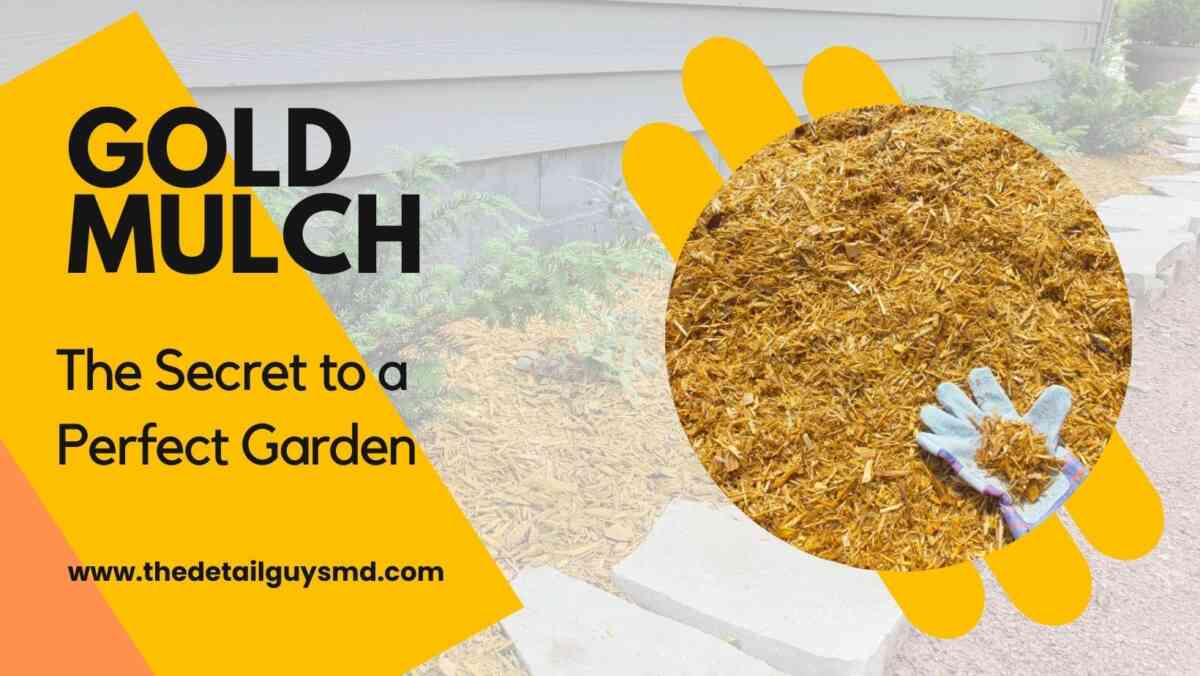
Gold mulch describes the look of the material. Check the label for the actual wood or bark, then test the color beside the house and plants. A small dry sample in sun and shade tells you more about how the finished bed will look than a photo on the bag.
Test the color beside fixed finishes
Put a sample near the walkway, siding, or retaining wall that will frame the bed. Look at it in shade and direct light. Compare it with a natural brown option before choosing a whole-yard color.
Compare gold with the materials that stay in place
Set a gold sample beside the siding, brick, or paving rather than against a white sheet at the store. Put a brown sample next to it and step back to the view most people see from the street. Check again under shade. The color that looks subtle against dark brick may be brighter beside pale siding. If flowers already provide the main color, try the sample when they are in view before buying in bulk.
Check for a source you can match later
Ask what material was colored and whether the supplier can identify the batch. A replacement bag from a different product line may have a different shade or particle size. If matching is important, record the name and supplier. When touching up an older bed, sample an area already exposed to the weather and compare it with the new cover after both samples dry.
Judge gold mulch against the house, then against the old bed
Make three samples with the same amount of material. Use the gold product, a natural brown option, and a handful from the bed you are considering. Set them against the paving or brick in daylight. Take a photo that includes the fixed surface, then repeat from the direction someone sees when approaching the house. If the gold feels too bright, try it as an accent at a single bed rather than choosing it across the entire property.
If you are topping up a bed that already has gold mulch, look at its most exposed edge and a spot under a shrub. They may no longer match each other. When the new shade differs from both, refresh a complete visible section so the change reads as one edge. Keep the label if you want to ask for the same product later and compare a sample of the actual batch before you open it.
If you are considering a stronger contrast, compare a red sample beside the gold and brown ones. Red mulch ideas.
EPA WaterSense explains what organic cover can do for the soil below it.
Compare gold and brown in the same bed
| Condition | What to compare | Next move |
|---|---|---|
| New bed | Gold and brown beside paving | Test one short edge |
| Existing bed | Dry samples from sun and shade | Match a complete visible section |
| Deep existing cover | Depth at several points | Rake thin areas before adding more |
Check the material behind the color
Ask the supplier for the material source and check the particle size. If you plan to top up a previous application, compare the new sample against a handful already on the ground. Howard County explains why to check the wood source and aging process when buying dyed mulch.
Create a small test bed you can undo
Use a short stretch that includes both plants and a hard edge. Look at the border after watering and sweep any pieces that land on the walk. If the change in color is stronger than you expected, try a narrower area or choose a more muted sample. Move the material away from stems before leaving the test patch in place.
Apply enough to refresh the bed
Measure the existing layer and address mounds before adding new cover. Keep it away from stems and trunks, and check that the edge does not bury a border or extend onto the walkway.
Buy for depth and coverage, then check the finished edge
Measure the exposed soil and subtract spots where the old cover is already deep. Buy by volume and set aside enough to make the test edge consistent with the rest of the bed. If it looks uneven after spreading, rake material into thin areas instead of adding another full layer. Review it again from the path and from indoors where the bed is visible.
Find your next step
Choose the condition closest to what you see.
How to avoid an obvious color mismatch
- Take one sample from a shaded section and another from an exposed section of the bed you want to refresh.
- Compare them against the new mulch when all samples are dry and in the same light.
- If the shades differ, refresh a complete visible section instead of dropping isolated patches of a brighter color into an otherwise uniform bed.
Keep planning
Common questions
Can I choose a shade from the bag photo?
Use the photo to narrow the options. Compare actual dry samples against the house and plants in both sun and shade. Measure the exposed soil and subtract spots where the old cover is already deep. Buy by volume and set aside enough to make the test edge consistent with the rest of the bed.
How can I match existing gold mulch?
Take a sample from the bed and compare it with a dry sample from the supplier. Put a sample near the walkway, siding, or retaining wall that will frame the bed. Look at it in shade and direct light. Compare it with a natural brown option before choosing a whole-yard color.
How can I compare two colors before buying?
Set out gold and brown samples in the same place. Ask the supplier for the material source and check the particle size. If you plan to top up a previous application, compare the new sample against a handful already on the ground.
What if the bed already has a thick layer?
Rake and measure the existing layer before buying anything. Measure the existing layer and address mounds before adding new cover. Keep it away from stems and trunks, and check that the edge does not bury a border or extend onto the walkway.
Talk through your project
Tell The Detail Guys what you are working on and what you have found so far.